RESEARCH
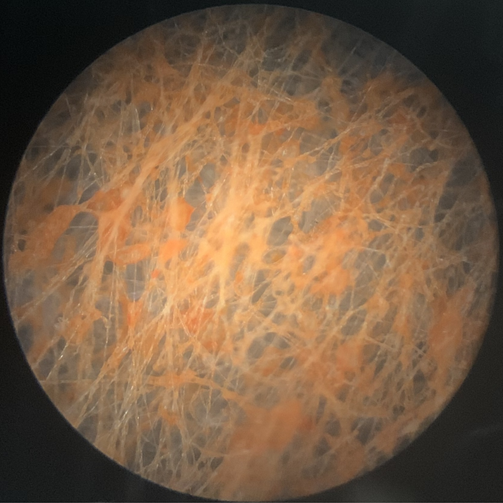
Our research to date successfully demonstrated live animal monitoring of Doxorubicin (DOX) release from the rubbery cover. The data was compared with in vitro drug release experiments, and a mathematical model was developed that yielded a profile in good agreement with experimental data. The time required for 100% release was estimated to be 1.8-2 years, highlighting slow sustained release from the porous implants. Our unique rubbery material platform uses new patented generations of the material used on the Taxus coronary stent and has been shown to have the same biocompatibility. Additionally, histological data showed that the “preventive chemotherapeutic layer” forming in between tumors and our drug-eluting implants had disordered morphology with only dead cancer cells, as opposed to the highly regular collagen structure on the implants without the drug. This latter discovery is significant as it may offer a solution to another major problem. Approximately 25% of women who are diagnosed with breast cancer each year receive breast reconstruction utilizing silicone breast implants in the United States. The patients receiving silicone rubber implants often experience inflammatory complications including capsular contracture, pain, implant rupture, and implant leakage due to the highly regular collagen capsule forming around the implant.
We predict that the first target market would be for early stage (I & II) breast cancer patients, followed by later stage (III+) patients. The expected improvements in quality of life include a reduction of side effects from traditional, global chemotherapy, including reduced hair loss, nausea, fatigue, etc., and may mitigate the problem of capsular contracture.
Planned development stages:
1. Complete a larger animal trial to establish dosage for a) maximizing collagen disruption in the capsule around the implant with no toxicity; and b) minimum toxic level to kill cancer cells.
2. Small Phase I clinical trial with healthy patients to investigate capsule formation and contracture levels (Baker scale I-IV).
ChemoCoat thanks the following organizations for their generous support of this ongoing research.




Click on any title below to see the full article.